
The sun still sets in the west
Reem’s emotions pour onto the canvas in a vivid display of colour, movement and unbridled energy.
Artwork: Dosain
12 hours ago
Through vibrant colours and expressive compositions, artist Reem Waheed captures familiar landscapes and fleeting moments of everyday life, inviting us to reflect on our roots and what it means to call these islands home.
The pristine white walls of Gallery 350 serve as rectangular windows, framing the vivid, painterly works in artist Reem Waheed’s first solo exhibition, The Sun Still Sets in the West. Each painting seems to dance with chromatic movement, its expressive brushstrokes and vibrant colours bringing the compositions to life.
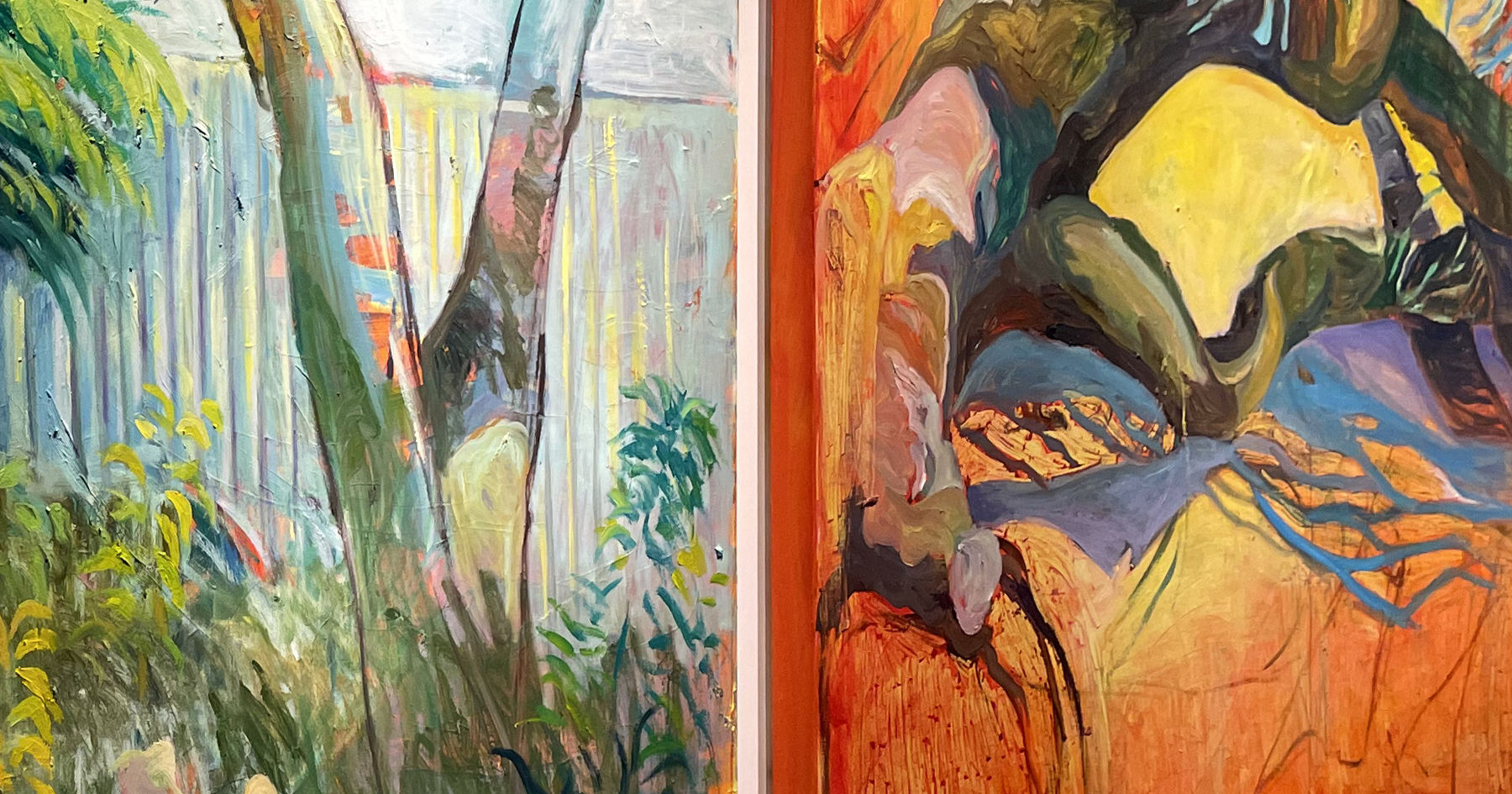
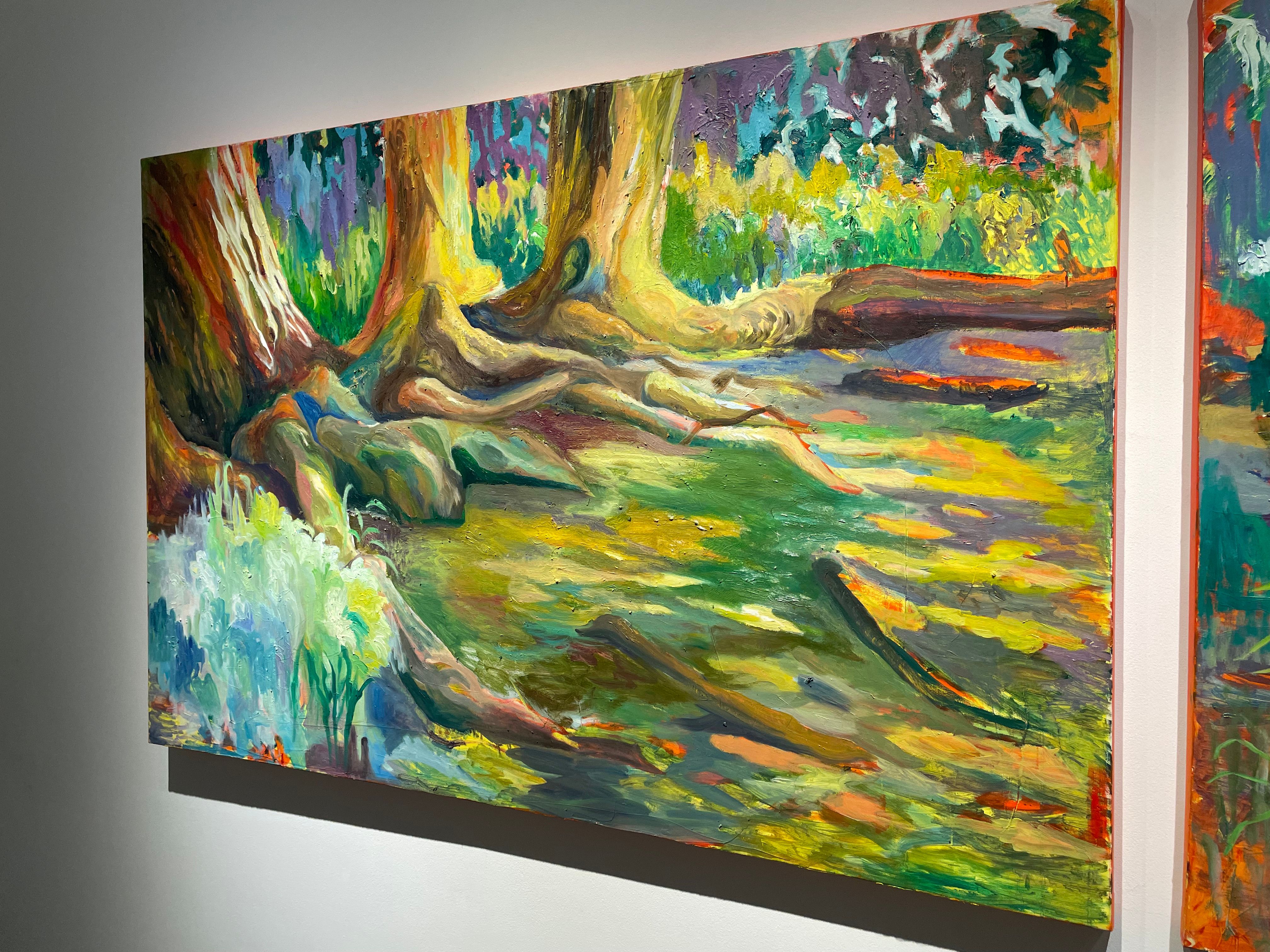
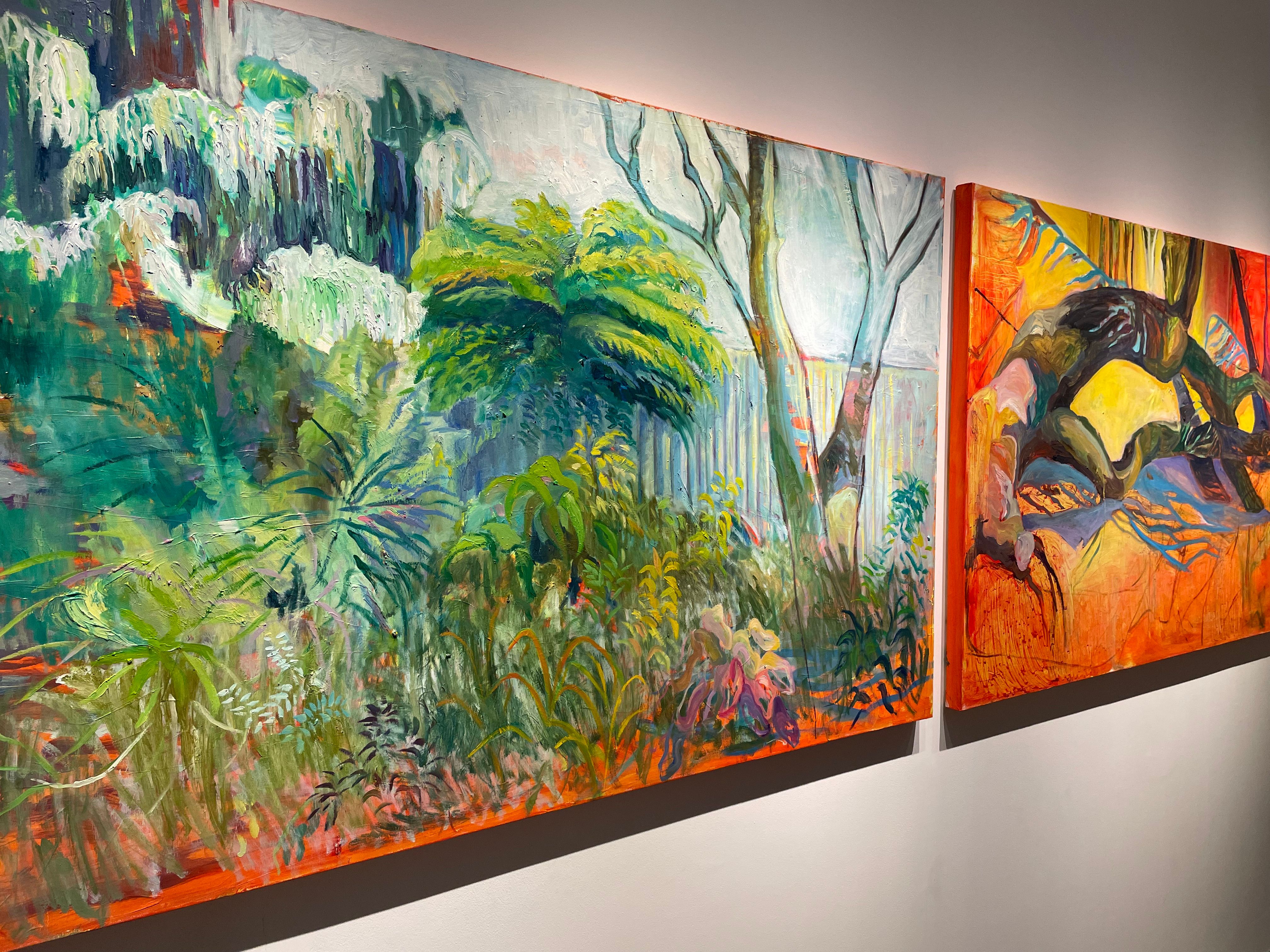
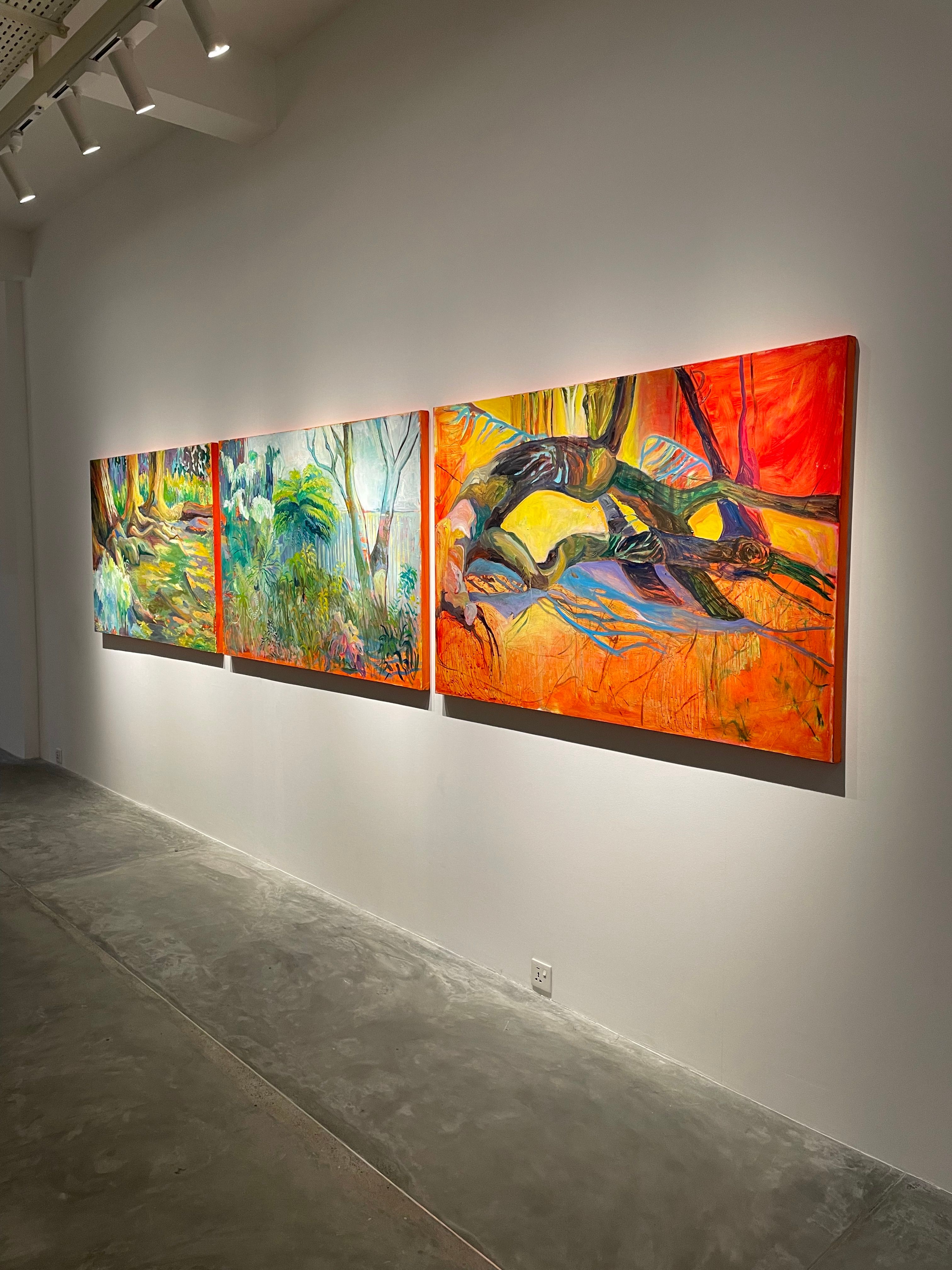
Upon entering the gallery, a three-panel series on the left, titled Roots, immediately caught my attention. The landscape paintings begin with trees and foliage illuminated by sunlight, their surfaces animated by expressive brushwork and layers of colour that lend them a sense of movement and spontaneity. A lively combination of greens, yellows, oranges and reds, rendered through an expressionist and post-impressionist approach, gradually gives way to abstraction in the third panel. Here, the composition becomes more intense, with vermilion and orange taking over much of the canvas, surrounding what appears to be part of an almost felled tree, its roots still exposed and ghost-like, painted in a rich cerulean blue. I found myself lingering over these paintings, taking in the subtle transformation from one panel to the next.
Reem later explains that the landscapes in Roots were inspired by scenery she observed in Hulhumalé and Vilimalé. There is something particularly striking about the way she captures these familiar surroundings, presenting their vibrancy through her own lens and heightening their beauty tenfold. In doing so, she seemingly preserves them in a frame, even as the landscapes around us continue to change and diminish.
Roots stayed with me long after I had left the gallery. A recurring question lingered in my mind - what are our roots, and how much of them do we have left?
It reminded me of a family trip to an island a few years ago, before the pandemic. We were walking around when my parents pointed out a breadfruit tree, reminiscing about how abundant these trees once were and how increasingly rare they had become, particularly in Malé. A sense of nostalgia swept over us, even though some of our younger cousins, who were part of the trip, had no recollection of seeing these trees growing so abundantly in the first place.
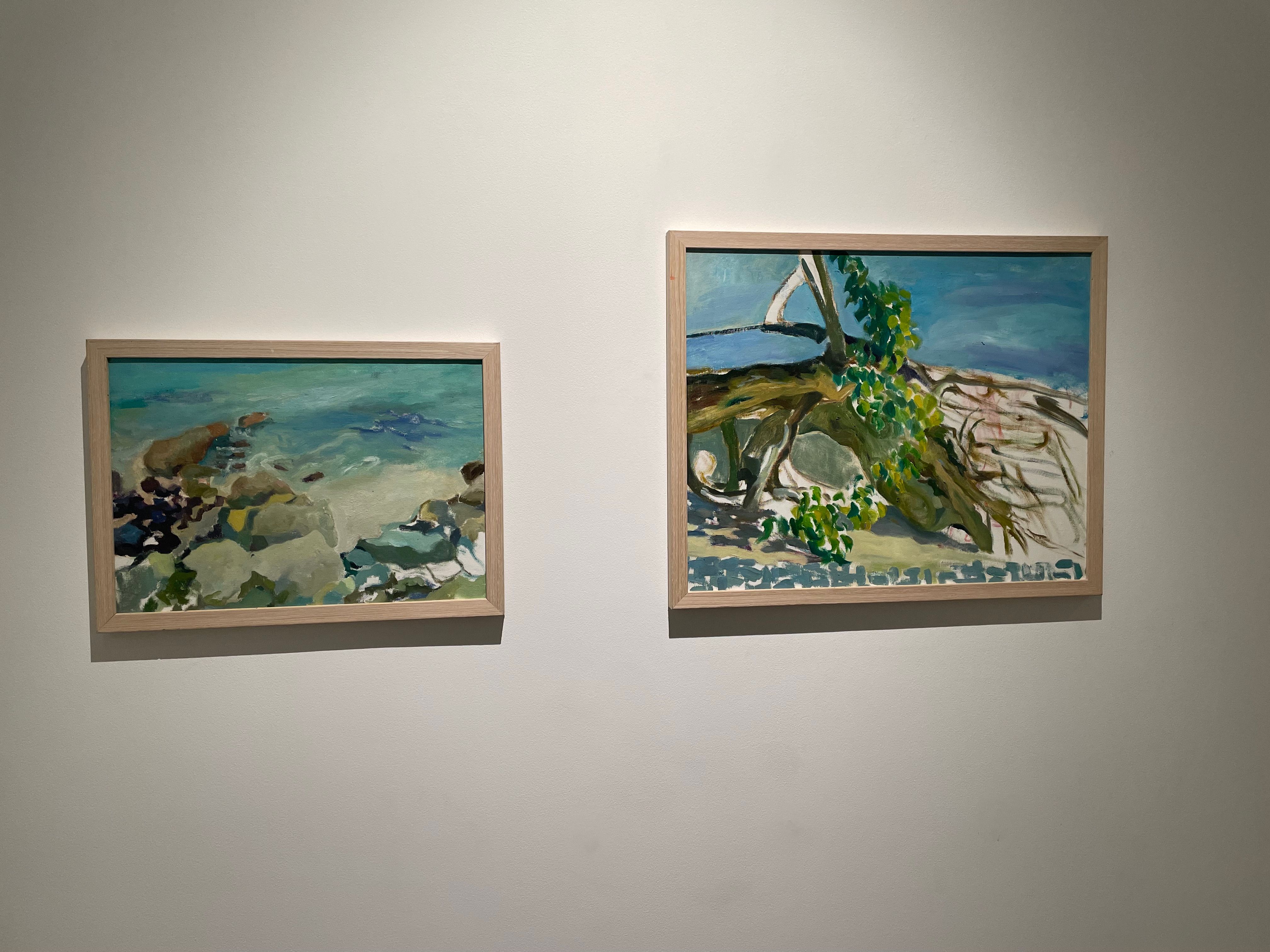
As trees are felled, lagoons reclaimed and mangroves cleared to make way for airports and other developments, the natural landscape of Raajje is steadily being transformed. The familiar horizon, once defined by open skies, stretches of endless ocean and tall coconut palms, is increasingly interrupted by towering buildings. Amid these changes, one cannot help but wonder: at what point do we begin to lose the things that make our islands feel like home?
Something as ordinary as spotting a breadfruit tree growing in an island compound can still evoke an unexpected sense of nostalgia, particularly when our parents point out how rare such sights have become. It is this bittersweet recognition of a changing homeland that lies at the heart of Reem Waheed’s body of work.
At 27, Reem’s exhibition marks her first solo presentation in the Maldives since graduating from the Fine Art programme at One Academy in Malaysia, over two years ago. Her previous solo exhibition, Majeedhee Magu, was presented as part of her graduation show, with a couple of paintings from that collection also included in the current exhibition.
“When I finished that exhibition, this one was already in mind,” she said. “I want to explore the same theme throughout my career. So this is a kind of continuation of that exhibition.”
Primarily working with oil paint, Reem documents everyday interactions and the layered urban complexities of life in Malé. A recurring theme in her work is an examination of modernity - its consequences, and how we accept, respond to and adapt our interactions to these changes. This context offers a deeper understanding of her paintings. They are beautiful, bursting with colour and movement, yet beneath those layers of paint lies a more serious message.
For the eight months leading up to her exhibition, Reem had been working between Hulhumalé and Malé, commuting between her home and her parents’ house, where her easels, paints and brushes were divided between the two. The commute between the two cities evidently provided her with subjects to explore through her landscape and figurative paintings.
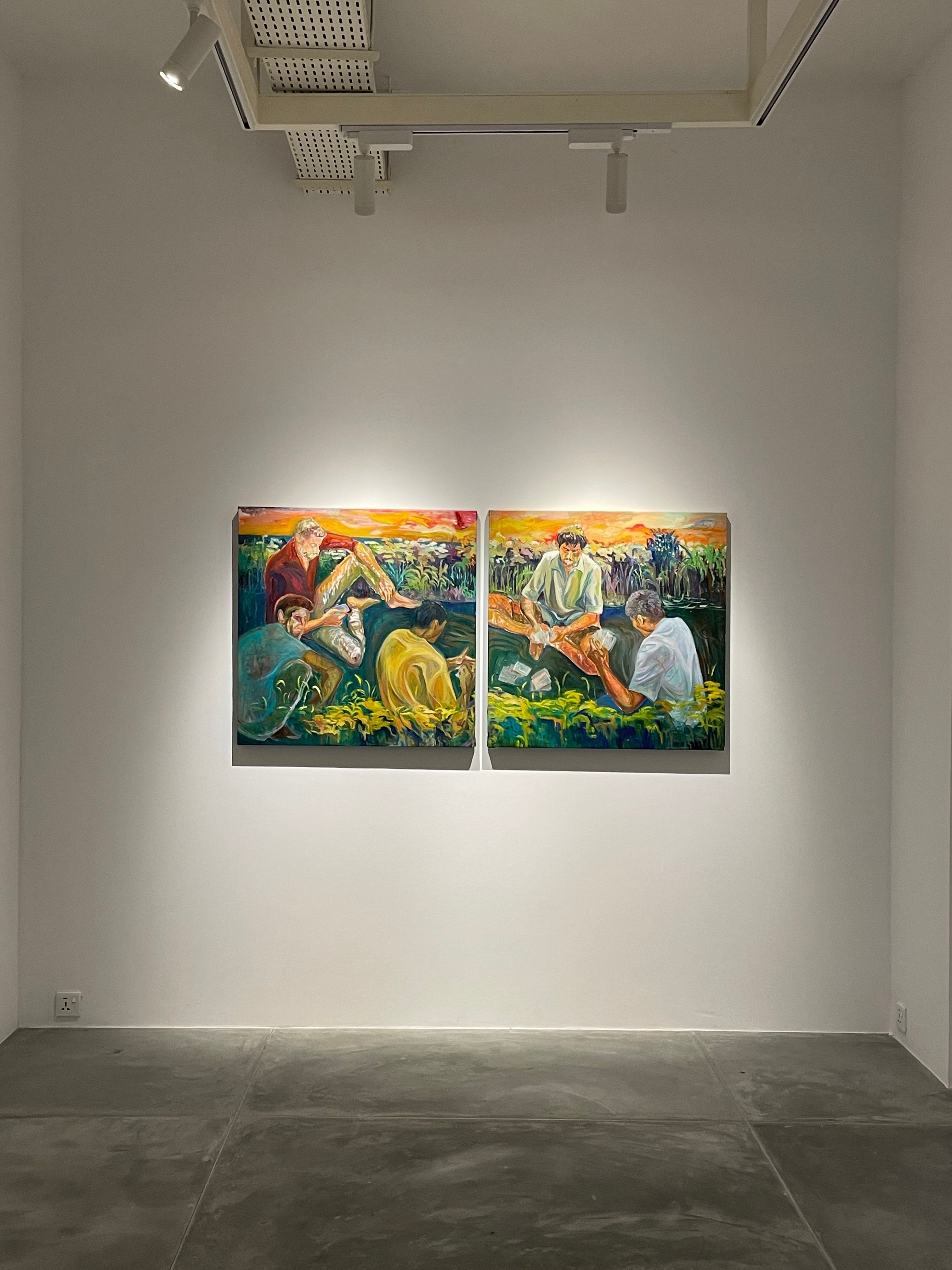
Card Players, a two-panel painting, depicts five people seated on a patch of grass alongside the Hulhumalé bridge, absorbed in their game. It is a sight we occasionally come across, particularly during weekends or at night, when locals and expatriates gather to unwind over a good old-fashioned game of cards.
“I don’t usually take photos when I am working on paintings,” Reem explained. She usually sketches from memory or makes an initial live sketch before developing the painting later. “For this, Izan (Reem’s husband) posed to help get the poses I saw.”
“I think the main thing I wanted is to remember how it felt when I was in a certain place. I like to paint the places I go to. That location is also a place I go by almost every day after work. Sometimes there are expats, even locals, playing some kind of card game or games in a street corner,” she explained.
Her use of a vivid colour palette, combined with loose, gestural brushwork, gives the paintings an expressive, almost visceral quality. Rather than offering strictly realistic representations, she evokes the emotional qualities of a scene. Card Players conveys a sense of calm and bliss through its rich greens and golden yellows, offering a brief respite from the urban chaos depicted in works such as KL and Walk Home. There is also a fleeting quality to these moments she captures - subjects making eye contact in the midst of a crowd, a momentary connection with a stranger.
The commutes also prompted Reem to reflect on how people moved around the city differently before she left for her studies in Malaysia, and what she observed upon returning.
“I was trying to draw parallels between Malé and Malaysia. Because even if you’re somewhere else, you’re essentially a Maldivian and you try to find some sort of commonality between those two things,” she said.
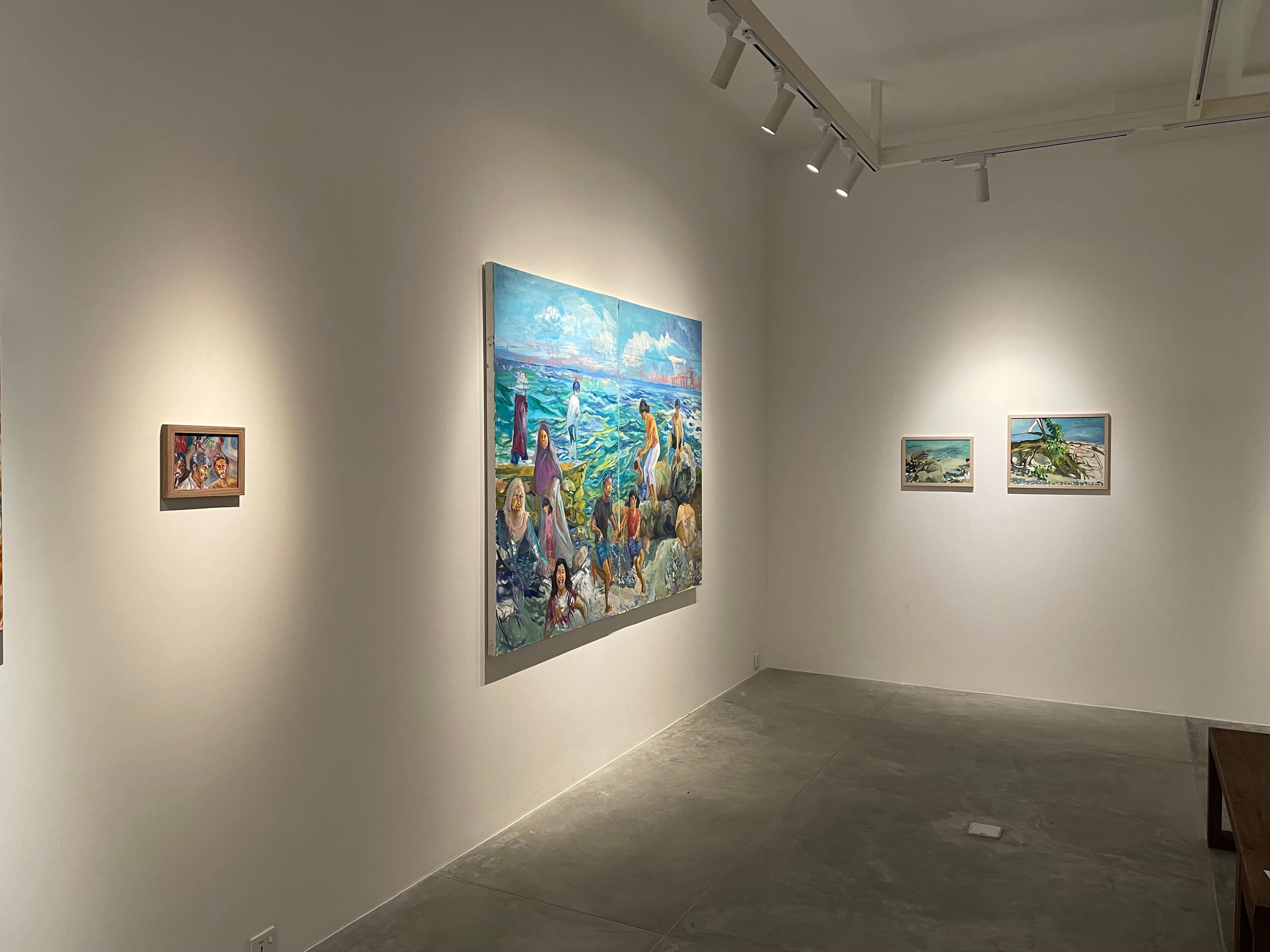
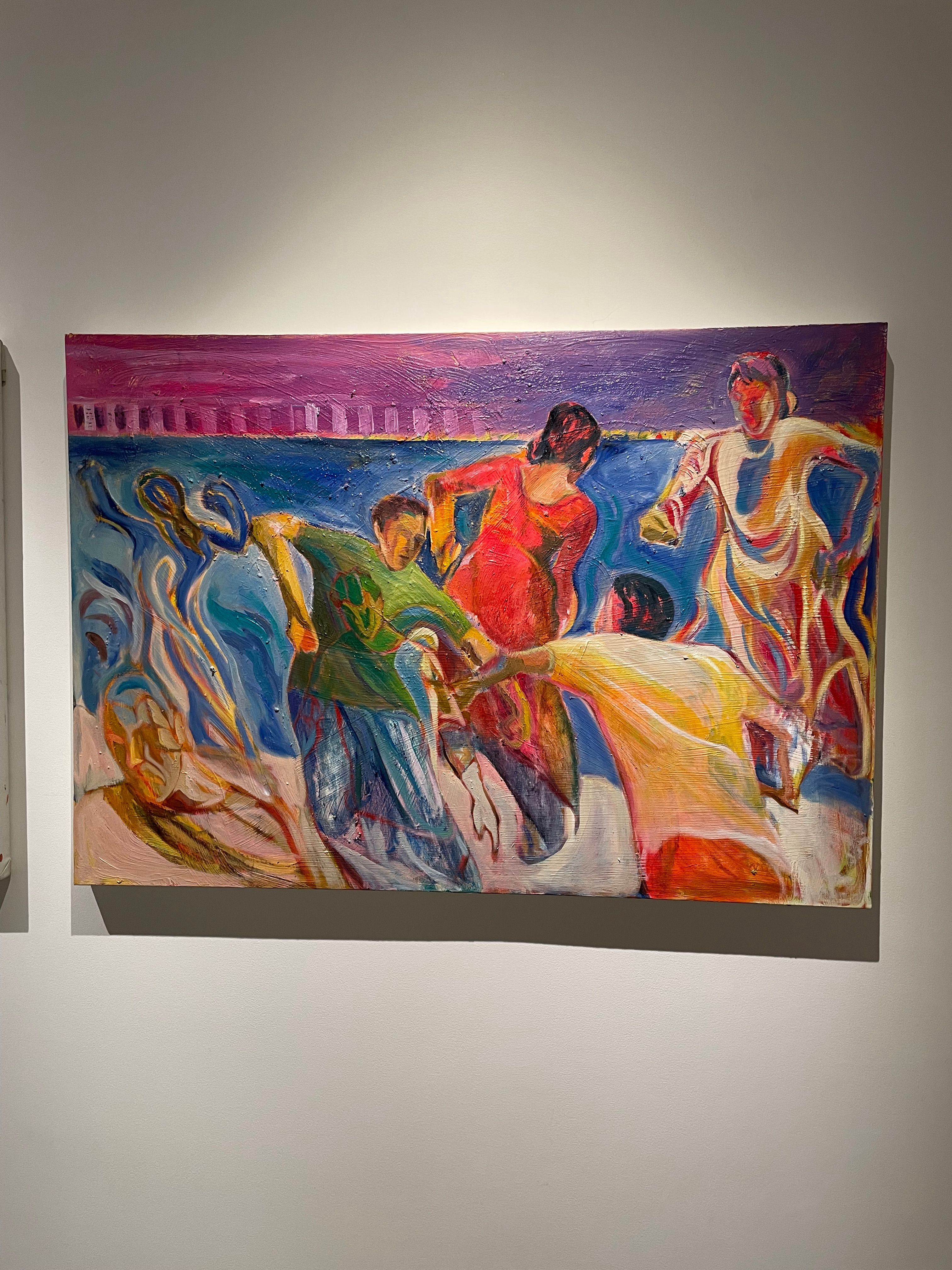
The title painting, The Sun Still Sets in the West, depicting people gathered by the sea, has a particularly intriguing quality. It captures a blissful moment that evokes everyday life, childhood, community and the familiarity of coastal living. There is a sense of movement and spontaneity, almost as though we are looking at fragments of lived experiences or fleeting memories. More than anything, it is an image almost every Maldivian can relate to.
The figures are animated, the compositions busy and the colours unapologetically vibrant. They seem to capture not just the physical setting but the feeling of being there.
“This being by the sea and hanging out with your family by the sea is something that is tied to our identity. I guess my question is with all the changes and development, what truly is our identity?” she asks.
Reem frequently visits Vilimalé to paint, taking the opportunity to study and document what she experiences and observes.
What I find particularly interesting is the relationship between nostalgia and expressionism in these works. The beach scenes, especially, remind me of the way we remember childhood; not necessarily through precise images, but through sensations, colours, movement and fragments of moments.
“Red is a colour we don’t often see on our beaches, but because of the constant construction work going on, with steel around, we are seeing red by the beaches too. Small things like that. It’s like when I am painting, I learn more because I am not planning it before I start. Even at the same location, I end up finding and learning new things,” she explained.
I found myself returning to her smaller oil-on-canvas sketches, which were displayed between the larger works on the gallery walls. Looking at them, I began to realise how even the smallest details we notice can contribute to a much bigger picture.
There was more to uncover in the Vilimalé coastal scene. Beyond its busy composition and seemingly blithe setting was the looming, ghostly shadow of a bridge - a reminder of reality seeping into an otherwise picturesque scene.
“I focus a lot on the horizon in my paintings. Since we are low-lying islands, we are very accustomed to the horizon and how the sun rises and sets on the horizon. But now our environment is changing, and it’s difficult to see that horizon anymore because of the buildings developed and blocking that view.”
Reem cleverly draws the viewer into what initially appears to be a happy moment, only to reveal a reality we are all facing. It is as though she gently lays down an uncomfortable truth, allowing us to take it in before we fully recognise its weight.
In one of her most colourful pieces, expressive figures dance along the coast in libaas and mundu, seemingly to a traditional tune, completely engrossed in the moment. The horizon, painted in deep magentas that dissolve into hints of fuchsia, suggests a sunset, while ghostly blocks of structures appear stacked against it. A reality check, I would call it.
“This is me as a passive observer,” she says.
There is an interesting contrast between Reem’s soft-spoken, humble demeanour and the expressive nature of her work. Her paintings are anything but subdued; her emotions pour onto the canvas in a vivid display of colour, movement and an almost unbridled energy.
Perhaps observing our surroundings without feeling some degree of emotion is, in itself, inhuman. At a time when conversations around nostalgia, disappearing landscapes and the consequences of development are becoming increasingly pertinent, Reem’s work invites us to consider what we truly value in life.
Perhaps what makes Reem’s paintings so compelling is their ability to make us pause and look again at things we might otherwise overlook. A familiar coastline, a gathering by the sea, the changing colours of a landscape as the sun sets - moments that seem ordinary until we begin to consider what they mean to us. Her paintings are, in many ways, a personal recollection of a place and time, but they also invite us to reflect on our own memories and the things that shape our sense of belonging. And perhaps, in that sense, the sun still setting in the west is a reminder that, despite everything that changes around us, some things remain deeply rooted in who we are.
Discussion
No comments yet. Be the first to share your thoughts!
No comments yet. Be the first to join the conversation!
Join the Conversation
Sign in to share your thoughts under an alias and take part in the discussion. Independent journalism thrives on open, respectful debate — your voice matters.
Support Independent Journalism
Help us keep the news free and fearless
Give once
$
or
Become a memberfrom $5/month